
Guillaume Bonnissent’s Insurance Technology Diary
Episode 99: Resistance is futile
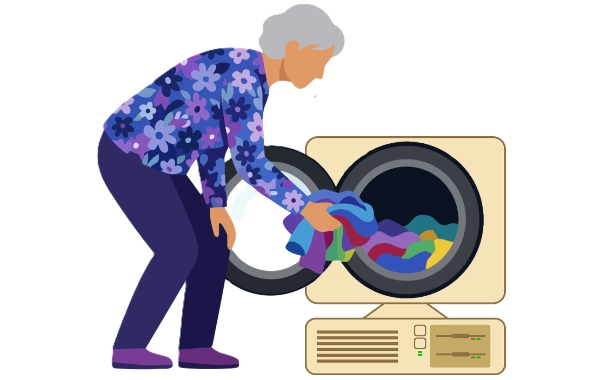
My grandmother continued to use her Flandria lave-linge à deux bacs (that’s a twin-tub washing machine) well into the 1990s. Not because it actually made the clothes cleaner or was more efficient, she repeatedly admitted. Every time my grandfather offered to get a modern washer, she proved reluctant because it would be too difficult to use (even though it would be easier), too noisy (even though it would be quieter), or too something else that masked her fundamental resistance to change. The truth was simple: it would have been too unfamiliar.
Technologies have a way of winning us over. We become dedicated to them. Think of the die-hards in the lingering Mac vs PC showdown. The same divide showed up again between iPhone and Android: everyone has had to choose a side, and stick to their own side’s app store.
Truth is, changing technologies is difficult because most of us (geeks excluded) recoil at the prospect of investing the required hours of fiddling about with different features and functions simply to get to the place we were before. Many fail ever to explore the functionality included by newer versions. That’s why young people seem so good at it: everything’s new.
It’s the main reason Excel spreadsheets are so enduring in underwriting offices. It took a long time to get used to typing in =SUM( when all we wanted was to add some numbers, which used to require only pressing +. Now that we’ve learned to add again, we don’t want to learn another bit of coding. We may never get to the ‘sum above’ button, which was added to Excel about 100 years ago.
It doesn’t have to be this way. The switch to a new system should deliver instant gains. Whilst a bit of a learning curve is inevitable, a new platform should be so intuitive that you can figure it out without pages of reference manual. You certainly shouldn’t need to use any special characters to get it to do what you want. Point and click has been the order of the day since Apple invented the mouse and the GUI (that’s ‘gooey’, or Graphical User Interface).
Today’s purpose-built business computing platforms should be labelled with the lingo, too. Since the right upgrade will be to a system built specifically to do what you need, the buttons you point to and click should be labelled with the words you already use. We want ‘Calculate Exposure’, not ‘Σ values’.
As for Excel and MS Word, no, sorry, they probably won’t have a place on your desktop for much longer. They will be replaced instead by tools that dovetail perfectly with the rest of the platform, feeding into it seamlessly, but also, with equal ease and accuracy, transferring to or transforming into documents in the widely used Microsoft Office suite. Probably no one will notice much difference.
But that’s just catching up. Next comes the leap forward. Instead of point and click, the latest underwriting platforms allow you simply to type what you want. They will speak the lingua franca of the market, and may even let you ask for things out loud.
When presented with a portfolio of risks, for example, the old way of discovering, say, total Florida exposure was to fiddle with the new spreadsheet for a while, then compare it to old, internal ones, until some kind of insight fell out of the bottom. A less technologically comfortable underwriter might have asked an assistant to compile the exposures in a new spreadsheet. Then the underwriter could compare that bottom line to the latest Group exposure report, which was probably a few months out of date, but that was probably the best available. (At least it wasn’t printed in dot-matrix onto paper with detachable holes up each side.)
This approach is common today, but is often now ‘enhanced’ through the basic application of Tier 1 AI. The underwriter may now ask a chatbot to do the grunt work, then interrogate the resulting exposure data (or whatever).
The leap forward way is to ask the platform (with the keyboard or even just by asking out loud, the same way we used to ask the underwriting assistant) to check the impact of the portfolio (which ideally would have been delivered by API, then instantaneously translated from its own data standard into the language of the platform, and continuously updated via a real-time link to the cedent) on total Florida exposure.
Even the asking may be obsolete, since the mere receipt of the spreadsheet could now trigger an alert that reveals a concentration of Florida that exceeds risk appetite at the underlying prices levied. The underwriter can then ask the AI-fuelled platform to calculate an acceptable rate for the risk.
Maths was important at school, especially in finance. Now, though, expressing oneself in plain English is more important. We have to ask the AI the right questions, or we won’t get the right answers.
Grandmothers of today no longer need to learn which settings to use, nor which buttons to press. Provided the newfangled tech was delivering the goods, if my mamie had survived long enough to be able simply to say to the machine: “veuillez laver les pantalons tout en coton s’il-vous-plaît”, she would have been happy to move forward. Forever the polite lady, she would have spoken to the machine with the utmost respect, and may have added:“toute résistance est inutile.”
* Like every Insurance Technology Diary entry about AI, this one is accurate only to the best of my knowledge at the time of writing. The pace of AI progress is so great that I cannot guarantee it remains so now that it’s finished, let alone when you read it.
Guillaume Bonnissent is CEO of Quotech.