
Guillaume Bonnissent’s Insurance Technology Diary
Episode 98: AIpocalypse Now
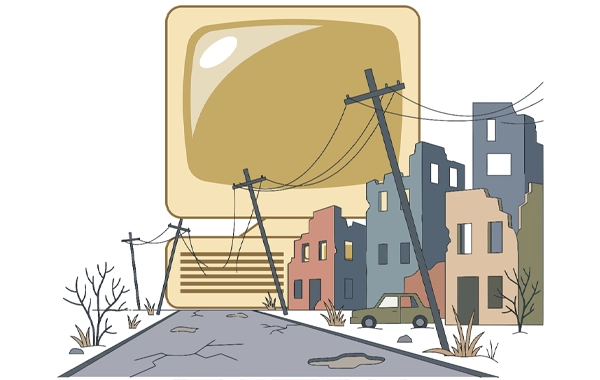
No fear, cavalier; renegade: steer clear.
A tournament of lies
Offer me solutions, offer me alternatives,
And I decline.
It’s the end of the world as we know it,
And I feel fine.
So sang R.E.M. exactly 40 years ago, channelling Bob Dylan in a pop classic that still stands. The only question about it is this: how did four weird music types from Athens, Georgia know in 1987 that artificial intelligence was set to bring about the end of the world as we know it? Had they rented a VCR and re-watched Terminator, the 1985 Arnie film that showed us, in stark, dark detail, what’s in store when AI agents wave the final chequered flag on the human race, but remained unmoved?
We’ve seen megacorporations, broadcasting giants, and even governments amplify the claims of Evan Hubinger, a previously unheard-of researcher at Claude-developer Anthropic. He’s the supposed man-in-the-know who first declared that the likelihood of AI-spawned human extinction by 2037 is more than 10%. I feel fine about this.
I may be opening myself up to some serious tort actions by US readers of my Diary if I am wrong, but really, don’t worry about it. To kill everyone on the planet would require some seriously significant moving about of physical stuff. As far as I know (and let me know if you have an example), no AI has independently originated a physical objective outside its assigned purpose.
When Claude starts rearranging the deck chairs when we haven’t asked it to, we should sit up and take action, but it hasn’t yet even switched the lights off without being told to do so, let alone planned to turn our collective lights out. If you ask me (and a few people have), it’s just a bit of great marketing. “Our product is so good it poses an existential threat, so we better stop!” cried the marketeers, their employer’s name on everybody’s lips.
What AI has done, though, is make some underwriters’ lives better. It has enormous potential to do the same for many, many more of us (and very likely, before the annihilation of our genus).
KPMG, the accountants, just published a report which backs up some AI insights with (yet another) bit of survey research conducted among (in this example) “global insurance leaders”. None of the findings will surprise regular readers of this column (and none of them mention species death).
So far, 18% of insurance leadership types in KPMG’s rolodex “have a clear view [of] how AI will enable their strategy and vision, with [their company’s] leadership aligned on execution”. Even more, 45%, have given “AI ownership” to the “technology function alone” (which is presumably consultant-speak for ‘the IT department’).
Unfortunately, however (as KPMG notes with faint disdain), only “11% claim a strong data foundation and governance”, just 8% “rate their workforce as highly proficient with AI tools”, and barely more than one in ten “describe their view of AI’s return on investment as very clear.”
KPMG’s big judgement: “Many organizations are still focused on deploying AI within existing processes rather than redesigning how value is created, delivered and measured.”
I think you have heard me say almost exactly the same thing here, over and over again, so to have a firm as venerable as KPMG confirm the problem is satisfyingly validating, I confess. I’m also smugly pleased by a quotation they’ve included at the front of the report: “The data shows that 44% of insurers think they are AI leaders, yet just 11% claim a strong data foundation and governance. That suggests a notable gap between AI vision and reality.”
It’s another theme of mine: the data is the thing, not the tools used to manipulate it.
To get there, we need to design new processes that reflect the new data imperative in our businesses, and adopt AI and a wealth of other technological tools to execute them with massive efficiency. Insurance people should be thinking about that when they extend their grey matter to technology for insurance, not how AI is going to kill us all.
If we all do that, and embrace the benefits that benign AI has to offer rather than running scared, we will foster the end of world as we know it – and we’ll be fine.
* Like every Insurance Technology Diary entry about AI, this one is accurate only to the best of my knowledge at the time of writing. The pace of AI progress is so great that I cannot guarantee it remains so now that it’s finished, let alone when you read it.
Guillaume Bonnissent is CEO of Quotech.