
Guillaume Bonnissent’s Insurance Technology Diary
Episode 100: AI on AI
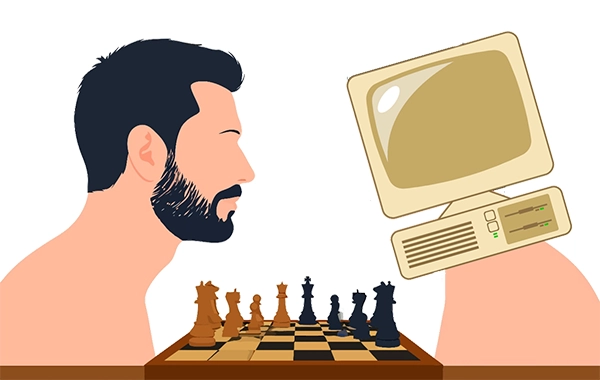
A man from Zurich Insurance recently argued during a webinar that AI should be used to remove underwriting friction, not to replace underwriting judgement.
Thunderous applause from me. I’ve written the same umpteen times in my Insurance Technology Diary. Since this is the one-hundredth entry, I thought it fit to finally give AI the chance to speak for itself, so I asked ChatGPT a very simple question: Why is AI a poor tool for making insurance underwriting decisions?
It almost instantly opined that AI is “much better at assisting underwriting decisions than making them autonomously,” since “underwriting involves predicting uncertain future events, often in circumstances where historical data are incomplete, misleading, or no longer relevant. [Its] capabilities do not necessarily translate into sound judgements about risk selection, pricing, coverage, or capital allocation.”
It identified ten “important weaknesses” in its own ability to make underwriting decisions:
- Insurance concerns future events, but AI models learn from historical observations.
- Proprietary claims dataset amplifies inherent inadequacies, so AI insights may not relate to the actual underlying risk, especially for casualty, catastrophe, and specialty risks.
- Worryingly, AI confuses correlation with causation.
- AI struggles with structural change.
- Tail losses are especially difficult to predict, which means “high average predictive accuracy can coexist with dangerously poor underwriting performance.” It’s a very good point.
- AI cannot reliably distinguish risk from price (let alone the fun to be had by arbitraging against reinsurers).
- AI may amplify existing underwriting mistakes, since it doesn’t necessarily clock that past mistakes were actually wrong.
- AI has difficulty interpreting contractual uncertainty. There’s also the risk of hallucination.
- AI creates problems of accountability and explainability.
- AI can produce false precision and encourage overconfidence. It’s like Spock estimating the odds of an alien attack at 89.46%; even he didn’t really have enough information to make that call.
ChatGPT claimed its “suitability” is “high” for extracting submission data, classifying exposures, identifying missing information, detecting portfolio accumulations, and predicting attritional claims (when the data is good), and that it prices standardised personal lines well when “controls” are in place.
Tellingly, though, ChatGPT admits its suitability is only moderate, limited, or poor for assessing complex industrial, pricing catastrophe exposures, assessing emerging cyber liabilities, interpreting disputed policy wordings, setting risk appetite, and making autonomous specialty underwriting decisions. “The fundamental distinction,” it concluded, “is prediction versus judgement”.
But wait. I had led the witness, a judge would say.
AI has told me on multiple occasions that it aims to please, both directly and I practice. Viz: a few weeks back my wife and I both asked our phones about the nature of kangaroos (it’s always exciting in the Bonnissent boudoir), but we asked the AI (Google’s Gemini) slightly different questions. I asked if they’re bipeds, she asked if they’re quadrupeds. Gemini delivered an emphatic yes to both of us. It really does aim to please.
Knowing this could have skewed the results when I asked ChatGPT to mark its own insurance homework, I asked Claude a less-leading question: Is AI an adequate tool for making underwriting decision?
“It depends,” Claude answered unsatisfyingly, then clarified.
“AI is adequate, and often better than humans in high-volume, homogeneous personal and small commercial lines.” In fact, a “well-governed model with human oversight of the model (rather than of each decision) is perfectly adequate”, Claude replied (emphasis added).
But a big but was coming. I could sense it. “AI falls short as the decisionmaker in specialty and large commercial lines, [where] the conditions that make models reliable mostly disappear”, our silicon-based slave confessed.
Claude went on to list many of the same factors ChatGPT had cited: Thin and unrepresentative data, non-stationarity, the absence of qualitative judgment, and “explainability and accountability”. Plus, AIs can make things up, which “makes them unsuitable as the final arbiter on acceptance, terms or price without verification.”
I changed it up again, but even when I asked: “Why is AI an excellent tool for making insurance underwriting decisions?” the reply concluded with: “AI is most useful when paired with human judgement, fairness checks, privacy safeguards and ongoing monitoring, with clear accountability for underwriting decisions.”
So, no matter where the question leads, three of three AIs surveyed agree. AI is a useful, possibly even essential tool for underwriting volume classes, but an underwriter is essential when the business is more complicated, since it bases everything on the numbers.
Great news. There’s hope for us all.
* Like every Insurance Technology Diary entry about AI, this one is accurate only to the best of my knowledge at the time of writing. The pace of AI progress is so great that I cannot guarantee it remains so now that it’s finished, let alone when you read it.
Guillaume Bonnissent is CEO of Quotech.