
Guillaume Bonnissent’s Insurance Technology Diary
Episode 81: In through the outsource door
Guillaume Bonnissent’s Insurance Technology Diary
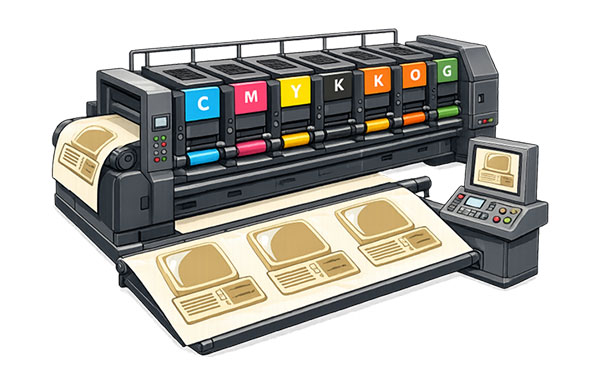
Years ago, when only academics and spies had email, I went to visit my pen-pal in America. He was a nice enough guy, but it was his father who taught me something about when to implement AI.
He was new money, what we then called the nouveau riche (even in English). He’d been a machinist at a factory that fabricated printing presses, back when the sheet-fed six-colour Heidelberg offset was still king. His employer was going bust, so he bought the business. Ten years later he was a printing-press magnate.
As we rolled up his dusty driveway, surrounded by saguaro cacti of standard-issue desert styling, I nodded to a small outbuilding in which several Mexican-looking gentleman toiled over machine tools. I’d already had the full manufacturing facility tour, so I was curious about this small outpost sited so close to home.
“That there’s ma wife’s business,” he said proudly. “Runs it all on her own.”
“What happens inside?” I asked, curious about this genuine garage industry.
“She makes parts,” my denim-clad, belt-buckled host said, dipping his head in a way that made his gigantic white hat fan some breeze onto my face. “Parts for printing presses.”
“So she works for you,” I said, assuming.
“Nope,” he said, “that ain’t it.”
He paused. I waited.
“She makes the little blades the cut the perforated sides of the multi-sheet no-carbon-required stock as it runs through the press, thereby holdin’em together,” he explained. “But she makes some fer other fellahs’ printin’ presses, too. Not just mine.”
We paused again. “When outsourcing became all the rage, it seemed like prime opportunity to take advantage,” he finally said.
He let show a subtle, self-satisfied smile, and I immediately understood the thinking that had made him wealthy.
When outsourcing first became business-trendy, horizontal de-integration was all the rage. First people outsourced the cleaning, then the maintenance, then the bookkeeping, then the components manufacturing, then the customer services, and more until for some the only bits left were marketing (performed predominantly by reliable agencies) and the outsourced-services manager.
Today we are wiser. Any decision to outsource is based on the same few, fundamental questions:
- Is it a core function central to your competitive advantage?
- Is it cheaper, but just as good to outsource?
- Can someone else do it better, and improve the final output?
- Are control and flexibility important?
- Does the process involve sensitive or regulated activities?
- Do the function scale or shrink regularly?
- Is there time to do it?
- Does it fit with the people and the image?
This is a great set of questions to ask when attempting to decide whether outsourcing would be right. It holds just as firmly when the question is about outsourcing to AI.
Getting AI to perform certain tasks is a lot like outsourcing them to a third party. If they’re core to your business, you probably shouldn’t do it. But when AI can perform non-core functions vastly more efficiently, whether that means cheaper or faster or both, it might be wise to bring the bots on board. If they can perform a routine or even a specialist task very much better (say, for example, it’s analysing submissions to look for inconsistencies), outsourcing to AI probably makes sense then too.
The cultural fit is always important in an outsourcing question, and the same is true with AI. If a decision to automate means gutting the workforce and losing the hearts and minds of those who remain, it probably isn’t worth it. However, if it simply makes everyone’s job easier (as it should do), then advance buy-in should be easy to obtain, and the AI solutions a breeze to implement.
There’s just one hitch with the AI-outsourcing parallel I have drawn here. A lot of the tasks that are ripe to be outsourced to AI are already outsourced to others. The AI age allows many outsourced functions like processing, analysis, and similar drudgeries to be brought back in house and outsourced to internal systems. So, it goes both ways.
AI adoption is the business-trendy flavour of the day. Almost certainly, gains are to be made for your business by enlisting Claude or one of his buddies. But amidst the adoption frenzy, remember to ask the fundamental questions, and always be sure that you’re the one taking advantage.
* Like every Insurance Technology Diary entry about AI, this one is accurate only to the best of my knowledge at the time of writing. The pace of AI progress is so great that I cannot guarantee it remains so now that it’s finished, let alone when you read it.
Guillaume Bonnissent is CEO of Quotech.