
Guillaume Bonnissent’s Insurance Technology Diary
Episode 80: To boldly go
Guillaume Bonnissent’s Insurance Technology Diary
A few weeks back I introduced my boys to the ultimate manna of geeky teenage big-screen nostalgia: Star Trek: The Motion Picture. For those too young to remember, it’s the 1979 reboot of the 1960s TV series. It has all the lustre and wonder of the cinema, if not the gritty feel and sophisticated light-and-magic effects of Star Wars.
The film is set in 2273. V’Ger, a mysterious constellation of weird alien tech, is approaching Earth. Admiral James (Jim) Tiberius Kirk sets off in the refurbished USS Enterprise to save the world. To do so, he must figure out V’Ger’s high-level prompt.
Along the way, he gets distracted by the super-attractive but unusually bald robot version of Navigator Ilia, who in fact is V’Ger’s shipboard cyborg probe. This high-tech spy on steroids has a mission of her own: to determine why Enterprise and the planet from which it hails are infested with inefficient “carbon units” (that’s you and me).
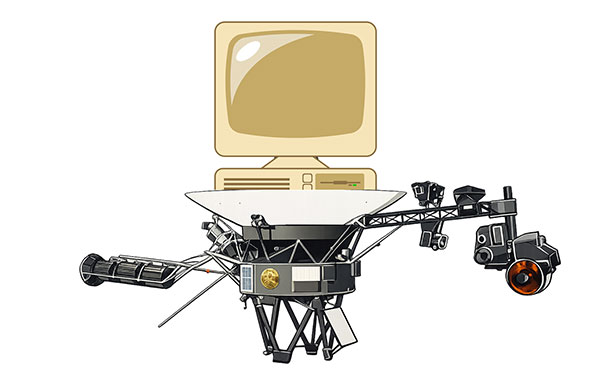
Turns out V’Ger is actually an evolved version of NASA’s real-life deep space probe Voyager. It had travelled to a galaxy far, far way, encountered an alien race of living machines, and was there enhanced. To help their fellow toaster achieve its goals, the kindly bots gave the far-from-home gadget a high-level prompt: learn everything, and take that knowledge back to your creator.
On its journey to fulfil its prompt, V’Ger has achieved sentience, and therefore must eradicate humanity (naturally). The alien gizmo race turned it into what real-life AI blogger Chirstopher S. Penn would categorise as a Level 5 AI.
Level 5 AIs can be given a very high level prompt (like ‘learn everything and tell your dad’), then make it so. Penn describes the five levels in detail in his latest Almost Timely News blog (which I highly recommend). To paraphrase:
- Level 1: Done by you. Cooking a meal at home. You’re doing virtually all the work, but AI helps.
- Level 2: Done with you. Cooking a ready-meal with a side of frozen veg. You’re doing about half the work.
- Level 3: Done for you. Going out for dinner. You are doing very little of the work.
- Level 4: Done without you. Your personal chef cooks for you in your home. AI does all the work.
- Level 5: Done ahead of you. Your live-in chef preps your meals without being asked. AI does the work before you even ask for it.
Level 1 is what we all use. Type in some words, get some words back. It’s up to you what they’re used for, and the quality of the prompt is key. The old GIGO rule applies (garbage in, garbage out).
At Level 2, the prompts are pre-set and a routine is established. The AI remembers most of what it is meant to do, but the text output is still yours to use as you wish. If you’re using open AI, it’s the ‘GPTs’ function. The app describes GPTs as “custom versions of ChatGPT that combine instructions, extra knowledge, and any combination of skills.”
Agentic AI tools appear at Level 3. Coded routines are powerful, and the AI can take one and run with it. At this level, the output too reaches the next stage: it can be written directly into systems. A basic ChatGPT subscription now gives you an ‘Agents’ tab to “keep work moving 24/7.”
Level 4 approaches AI autonomy. The user sets goals and performance metrics, and the AI does the rest, getting better (‘learning,’ maybe) as it goes.
At Level 5, the AI does and remembers everything. It’s given a blue-sky goal, and goes to town with it. The AI anticipates next steps and executes them. Such systems are not quite ready to roll out, but they are very, very close.
The implication is this. To get past Levels 1 and reach Level 2 successfully, we need to stop thinking about writing prompts, and instead get our heads around the idea of defining our AI’s skills. Instead of prompting for a specific text output – a glorified Q&A – we must define skills which can be applied across multiple tasks. Next we need to bundle those skills and add new ones which instruct on the creation of non-text outputs. That gets us to Level 3. Level 4 will in almost all cases require, at the very least, some help form the IT department.
To reach Level 5 is to boldly go where no one has gone before. We may need to beam down to the planet’s surface and take tricorder readings. But beware: if you’re an ensign in a red jersey, you probably won’t be coming home.
* Like every Insurance Technology Diary entry about AI, this one is accurate only to the best of my knowledge at the time of writing. The pace of AI progress is so great that I cannot guarantee it remains so now that it’s finished, let alone when you read it.
Guillaume Bonnissent is CEO of Quotech.